

Highlighting Rare Disease Day

Cheryl Petruk, founder of Heal Canada, joined The Andrew Carter Morning Show to discuss Rare Disease Day, a global awareness initiative held annually at the end of February. The day aims to highlight more than 7,000 rare diseases that collectively affect millions of people worldwide.

Andrew Carter

Rare Disease Day is coming up at the end of the month. It’s a moment to shine a light on a part of the healthcare system that doesn’t often get the attention it deserves. Cheryl Petruk is a founder of Heal Canada, a leading voice in patient advocacy, is on the line. Good morning!

Cheryl Petruk

Good morning. How are you today?

Andrew Carter

I’m fine. So is this a day that we talk about what I call orphan diseases, people that, that, you know, diseases that people don’t really know that much about but need some attention?

Cheryl Petruk

Absolutely. So, you know, it’s a global awareness day that every year, at the end of February, you know, especially in leap years, um, tries to shine the light on more than seven thousand rare diseases. Um, you know, and these diseases will affect millions of people worldwide. It’s not just, you know, if there’s only one or two people in the world, it’s millions of people that have these rare diseases. And here in Canada, one in twelve people lives with a rare disease.

Andrew Carter

When you’re talking about, you know, thousands of rare diseases, how do you tackle a problem that big?

Cheryl Petruk

Well, gosh, you know, while each rare disease is, you know, individually uncommon, together they can, you know, affect a significant portion of a population. You know, so in Canada, while our population isn’t, you know, the same numbers as the USA or other countries, you know, really it’s, it’s a diagnostic odyssey that patients will be traversing on because they experience the same issues and symptoms as people that have, you know, a generic garden variety type of disease, you know, stress and difficulty accessing appropriate care. And, but, you know, really the burden of these rare diseases is really quite heavy financially, emotionally, you know, and even socially.

Andrew Carter

And probably not a lot of support, not a lot of information about what you have. I mean, I’m just thinking a friend of mine who has transverse myelitis, and when she, you know, she started the Transverse Myelitis Association because there was just no information on it. There was no, there was no support. There was, it, uh… People, you know, just don’t know these diseases.

Cheryl Petruk

Absolutely. You know, and one of the biggest gaps in our healthcare system with folks that have a rare disease is typically a delayed diagnosis. So, you know, folks will see whether it’s children or adults, they’ll see multiple physicians, you know, over several years before getting that answer. And so establishing an advocacy group or establishing that community, um, can help people living with that rare disease because, you know, specialized treatments, coordination of support services, you know, people want to not be alone. They want to know that there’s someone else there experiencing the same issues that they’re experiencing. So it’s really important for folks to come together and have that connectivity.

Andrew Carter

When someone comes down with a rare disease, I mean, do they, uh, is your organization a place where they can, they can start?

Cheryl Petruk

Absolutely.

Andrew Carter

Maybe you point them in the right direction. How would they get in touch with you?

Cheryl Petruk

Our website is www.healcanada.org. We like to amplify the voice of the patient organization. So absolutely. If someone comes to our organization and looks for information, we’re gonna steer them to that community-based organization where they can be amongst, um, other folks that have that same disease, where they can get that specialized information. Um, you know, it’s really important to, I don’t want to say to funnel those patients, but that’s where the grassroots is, and that’s where they need to connect, you know, with their community. So it’s really about awareness, about learning about rare diseases and sharing that information so that people who are diagnosed with these rare diseases can get the information that they need, and help them live a better quality of life with better healthcare outcomes.

Andrew Carter

Cheryl, thanks very much for your time. Good luck with this.

Cheryl Petruk

Thanks so much. Have a great day.

Andrew Carter

That is Cheryl Petruk, founder of Heal Canada.

This interview was published by The Andrew Carter Morning Show. Listen to the original podcast by clicking here.
Finding Purpose

A partner‘s cancer diagnosis led this woman to discover her passion for patient advocacy

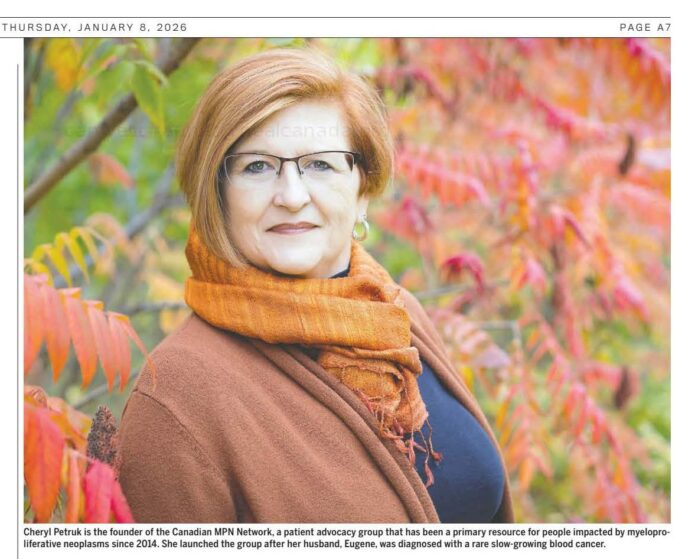
Cheryl Petruk never planned to become a magazine publisher or the founder of a not-for-profit organization. She was working as a HR professional in 1991 when her husband, Eugene Petruk, was diagnosed with a rare slow-growing blood cancer that is in a group of blood cancers known as myeloproliferative neoplasms (MPNs).

To support her husband and be the best possible caregiver, Cheryl learned everything she could about the disease, but it wasn’t easy.

Cheryl and Eugene talked to doctors, reached out to other patients and scoured the internet to find answers to their questions about this rare disease.

“Patient advocacy is so important when you’re facing a serious health care concern and you can’t be an effective advocate if you don’t have good information Cheryl explains. “I figured that if I had questions, there were undoubtedly others who
had the same questions.” 

In 20l4, Cheryl and a group of others founded the Canadian MPN Network, a patient advocacy group that has become a primary resource for people impacted by MPNs. The organization provides information and helps connect patients and their caregivers with support groups. Cheryl served as the chair of the volunteer board for more than five years.

“Participating in a support group can really make a difference when you’re dealing with a serious health issue,” says Cheryl. “When you get together with other people, you don’t feel so alone.”

When Cheryl’s husband, succumbed to his disease in 2018, she might have chosen to walk away from the advocacy work she had been doing, but instead she doubled down. The Canadian MPN Research Foundation, a not-for-profit organization dedicated to funding research for MPN blood cancers in Canada, was established in 2018 and she went on to serve as the organization’s executive director for more than five years.

During this time, she had the chance to meet and help others impacted by MPN blood cancers and one of those people was Wendy Reichental. Wendy was approaching her 60th birthday when abnormalities were detected in her blood tests at an annual medical check up.

“I had no symptoms, so the cancer diagnosis was a complete shock,” Wendy says. “I was fortunate that it was caught early. I wanted to learn more about the disease, so I Googled MPN Canada, and this organization came up. I called and spoke to the executive director, and she became my lifeline. Cheryl and I have never met in person, but she has become a dear friend.”

Progress has been made with treatment of MPN blood cancers and even though there isn’t a cure, it can be controlled with long-term chemotherapy.

“Doctors have predicted that I’ll die with the disease, but I won’t die because of it,” Wendy explains. “You take it one day at a time. I am fortunate that I haven’t experienced hair loss or other more serious side-effects from long-term chemotherapy.”

In 2023, Cheryl stepped down as executive director of Canadian MPN Research Foundation and focused her efforts on Heal Canada, an organization she founded in 2018 that is dedicated to patient education and patient advocacy in a broader sense, not limited only to MPN blood cancers.

A year later, she asked Wendy to assist with a free magazine called E3 Advocacy Digital Magazine for Heal Canada. The magazine’s current issue is focused on navigating insurance and health coverage, a topic that applies to anyone who is dealing with a serious disease or illness. Wendy says that assisting with the magazine has given her purpose and allowed her to focus on helping others rather than becoming consumed with her own illness.

Patient advocacy has become a passion for Cheryl who found her life’s work because of her late husband’s cancer journey.

“I am enjoying what I do,” she says. “Helping people help themselves in their own health journey is very rewarding.”

This story was published by Montreal Gazette. To read the original blog post please click here.

James’ story: Navigating life with myelofibrosis

Myelofibrosis is a rare blood cancer that can have a significant impact on patients’ quality of life.

James, 73, is a partner in a chartered professional accounting firm. “I love what I do,” he says. “It’s not a job. All my clients are friends.” Outside the office, James employs his creativity in a different way — playing guitar and bass. “Music takes my stress away,” he says.  

Focusing intently both at work and while learning a new riff allows James to take his mind off his health troubles. It all started with a mini-stroke in December 2024. “They took my blood and found out my blood platelets were really high,” says James. “The doctor explained that this likely meant I had a form of blood cancer.”  

Doctors put James on a medication and performed a bone marrow biopsy, which confirmed his diagnosis: myelofibrosis (MF), a rare blood cancer that starts in the bone marrow. 

A rare diagnosis 

“Next thing I know, I’m at the stroke clinic one week and the cancer clinic the next week, juggling all these doctors’ appointments,” says James.?  

The diagnosis came as a shock, but James’ reaction to his diagnosis was pragmatic. “Everybody’s got something,” he says. “I’m not going to go home and start crying. You just get at it and deal with it.” 

Separated from his wife and without a caregiver, James turned elsewhere for support. He contacted Heal Canada, an organization focused on patient advocacy through empowerment, engagement and education. “My friend started the non-profit after her husband died from MF,” says James. “She helped me ask the right questions and navigate this journey. She was a big help.” 

Patient organizations play a vital role in empowering Canadians as they navigate the challenges of a blood cancer diagnosis. Alongside Heal Canada, the Canadian MPN Network stands out as a key resource, offering invaluable education, fostering connections to essential support services and acting as a bridge to the medical community for Canadians living with MF. 

Understanding myelofibrosis 

“MF is a cancer where scar tissue forms in the bone marrow,” says Dr. Brian Leber, a clinical hematologist involved with the Juravinski Cancer Centre and professor emeritus at McMaster University. “Because of the scarring, the rest of the bone marrow doesn’t function as well.” 

Depending on the stage of cancer at diagnosis, patients can present with low red blood cell counts, and either higher or lower-than-normal numbers of platelets and white blood cells. 

“The bone marrow is where blood cells are most commonly made, but blood cell production can also take place in the liver and especially the spleen,”?continues Dr. Leber. “When the bone marrow gets damaged, the spleen essentially takes over its function and becomes enlarged.” 

Other key signs and symptoms of MF include fatigue, easy bruising or bleeding, feeling full quickly, night sweats and anemia. 

Dr. Leber also notes that while a normal red blood cell lives for three to four months, with an enlarged spleen, that time can dwindle to just one month due to the spleen’s role in red blood cell clearance. “The function of the spleen also contributes to the anemia,” he says. 

MF affects more than blood counts and spleen size — it also drives systemic inflammation. “People can have widespread, systemic side effects,” says Dr. Leber. “Some patients have the same degree of inflammation as somebody with severe untreated rheumatoid arthritis. There can be unintentional weight loss, bone pain and loss of appetite.” 

MF is quite rare, making diagnosis challenging. While there’s no national MF registry, data suggests that the number of patients with MF in Canada might be around 2,000, according to Dr. Leber. 

Living with myelofibrosis

For James, navigating life with MF has meant making adjustments. Being a partner in his firm, he has no plans to quit working. “I’ll never retire,” he says. Days at the office look a little different now, however. 

“The only real symptom I find now is being very tired,” says James. “I’m lucky to have a couch in my office, so I can take a nap when I need to.”

James is also anemic (usually defined as a hemoglobin value of less than 135 g/L in adult men), which can contribute to fatigue. “My hemoglobin got down to 90 g/L,” he explains,” and once it gets down to around 70 g/L, my doctors say I may need a blood transfusion.” 

MF can be quite difficult to treat, especially the anemia associated with it. “Blood transfusions are very time-consuming, and some patients need them once a week or even more frequently,” says Dr. Leber. They can also cause complications, with excess iron affecting the organs and requiring additional treatment to remove it. 

Dr. Leber recommends that patients and families who are navigating this rare disease take a proactive approach to their care. “It’s important to be attached to a hematologist who has a good interest in this condition,” he says. “There are some people who don’t need treatment at the beginning, so it’s important to make sure they’re with a practitioner who recognizes when they do need treatment.”

Despite the challenges of living with MF, James maintains a positive attitude. “I try to keep active with work and my music and enjoy going to plays and concerts,” he says. “I’m very fortunate. I’m not somebody who stops living when faced with a challenge.”

Visit Heal Canada to learn more about MF and talk to your health-care provider to discuss treatment options.   

Another valuable resource is the Canadian MPN Network, which supports patients at every stage—from diagnosis to early and late phases of treatment. Their network connects individuals with others facing similar circumstances, offering a dedicated and invaluable resource within your region. 

This story was created by Healthing Content Works, Healthing.ca’s commercial content division, on behalf of GSK.

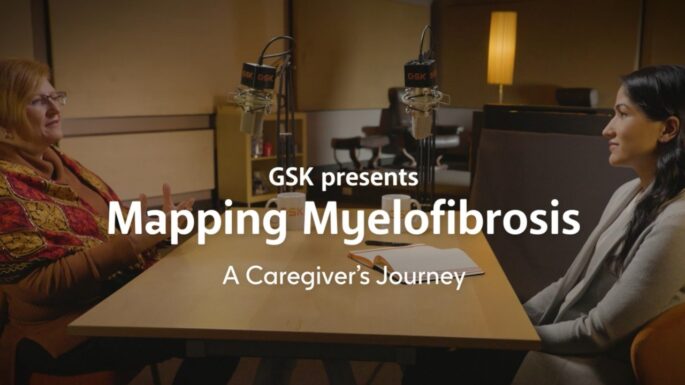
Mapping Myelofibrosis Podcast

Episode 1: Cheryl Petruk & Jasmine Sahni

Episode 1 features Cheryl Petruk, the Founder of the Canadian MPN Research Foundation and also the Executive Director of the Canadian MPN Network. Watch as Cheryl shares her husband’s journey with myelofibrosis as well as her own perspective as a caregiver with Jasmine Sahni, Scientific Director, Global Medical Affairs at GSK.

How anemia could signal a rare blood cancer

Karen Hawthorne

Anemia is one of the most common and serious complications of myelofibrosis, a rare blood cancer where too many blood cells are produced in the bone marrow.

Iron deficiency symptoms can be severe or persistent fatigue, cold hands and feet, weakness, shortness of breath, a tingling or crawling feeling in the legs, or even tongue swelling or soreness. It’s a health concern that can be an emotional and physical drain on well-being.

But many don’t realize that there’s a connection between iron deficiency, formally known as anemia, and blood cancer.

This is especially concerning when anemia is prevalent among women of reproduction age at 21.3 per cent in Canada, according to the 2019 Canadian Health Measures Survey, the latest research available.

Anemia is one of the most common and serious complications of myelofibrosis, in particular, which is a rare blood cancer where too many blood cells are produced in the bone marrow. This causes scar tissue to build up in the marrow, leading to a decrease in normal red blood cells, white blood cells and the production of platelets. What can happen is the spleen and liver enlarge to compensate by taking on the role of making more blood cells. People with myelofibrosis – an estimated 1,400 to 2,177 Canadians are living with the disease – face poor overall survival, reduced quality of life and the need for frequent blood transfusions.

Dr. Vikas Gupta, a hematologist with University Health Network in Toronto and leading authority on anemia and blood cancer, says that he has focused his career on blood cancer because patients like those with myelofibrosis had nowhere to go until more recently. “We did not have any treatments available for these patients apart from the option of a bone marrow transplant, which was applicable to a very small proportion of patients.”

He says anemia-related symptoms are a huge problem for patients already under the duress of having an incurable blood cancer, and most patients with myelofibrosis will develop anemia as the disease progresses.

“Anemia is one of the major symptoms in patients with myelofibrosis at the time of diagnosis of myelofibrosis, present in about 1/3 of the patients. However, within the first year after diagnosis 75 to 80 per cent of patients will develop anemia, so it is an important part of the solution for treating the disease.”

Just because you’re not a female of reproductive age, doesn’t mean you’re not a risk. It is typically diagnosed in people between 50 and 80 years old but can occur at any age and often takes many years to develop. While Gupta says knowledge and therapy of myelofibrosis has progressed in the last 15 to 20 years, the cause isn’t fully understood.

What is known is that the disease develops from overactive signaling in the JAK, or Janus kinase, pathway that regulates blood cell production and inflammation. The over-activity has been linked to a number of genetic mutations.

In other words, cells mutate and can disrupt blood cell production, but there are few certainties.

“It takes a very long time for these mutations to turn into disease. If someone is found to have this mutation at a very low level, it’s not necessary that everybody will develop the disease, but there’s a high risk they will.”

How would you know if you had a problematic mutation?

You might experience symptoms like fatigue and weakness related to anemia, or symptoms related to an enlarged spleen where you have abdominal pain. You can also have fever, night sweats and weight loss. But here’s the thing: many times patients are completely asymptomatic, Gupta explains.

A blood test would show abnormalities, but imaging and a bone marrow examination would lead to a diagnosis – making those regular checkups with a doctor key to early diagnosis and better outcomes for patients.

Cheryl Petruk, CEO of HEAL Canada patient advocacy non-profit, lost her husband Eugene to myelofibrosis in 2018 when he was 60 years old. He had lived for 19 years with essential thrombocythemia, a rare blood disorder where there are too many platelets in the blood, but it had progressed and developed into myelofibrosis. “It is exactly the opposite of being too many platelets in your blood. Now your bone marrow has become fibrotic. It is not producing the right blood cells and your spleen enlarges because it’s trying to do a job that your bone marrow is not able to do.” The diagnosis came in 2010 and Petruk went on to learn that her husband had “an incurable blood cancer with a shelf life of five to seven years.”

His spleen was the size of a CFL football, she says, and he experienced fatigue and bone pain.

“There’s just a host of physiological symptoms that one goes through and they can be very debilitating, but probably fatigue is the biggest, not having energy because your red blood cells are not being born in your bone marrow to give you the oxygen you need. In the late stages he developed pulmonary hypertension, so he was oxygen dependent.”

And to manage his anemia, he became dependent on blood transfusions since 2010 with one transfusion a year at first. As his disease progressed, by 2017 and 2018, he was transfusion-dependent every 10 days. “He was more like an 80 year old,” Petruk says of his deteriorating final days.

Now medications are seeing significant improvements that can replace the need for blood transfusions in severely anemic patients. Gupta talks about the discovery of the JAK2 mutation in late 2004 that sparked growing interest in developing a group of drugs called JAK inhibitor therapy for inflammatory and hematological conditions. The first generation was approved by Health Canada in 2012. Now there are three JAK inhibitor drugs for Canadians with myelofibrosis, with Ojjaara (momelotinib) approved in November 2024 as a breakthrough for patients because it treats both the anemia and other symptoms of the cancer. Some patients with anemia couldn’t tolerate JAK inhibitors because it didn’t address their anemia – but now there’s another option for them, Gupta says. His team participated in clinical trials for Ojjaara, which is an oral medication taken once daily.

“For many patients, their anemia improves on Ojjaara. Since anemia is a prominent symptom in patients with myelofibrosis, that’s why availability of Ojjaara is so important. This drug addresses all sets of symptoms.”

For Petruk, she’s happy to see a drug approved that can improve quality of life for patients. Her husband may have survived longer had the medication come sooner. He was on one of the first JAK inhibitors in 2016.

“Unfortunately, when it became evident that that drug had stopped working for him, he couldn’t go on any clinical trials because there’s inclusion criteria in clinical trials. And he had developed hepatitis antibodies,” Petruk says. “So there was nothing else. He had a consult for a stem cell transplant and they found a match, but they only gave him 10 per cent success.”

Her advocacy work gives her a sense of purpose that has kept her going. “It keeps his legacy alive. I’m doing it because I couldn’t help him. But hopefully I can help others.”

To read the original blog post please click here.