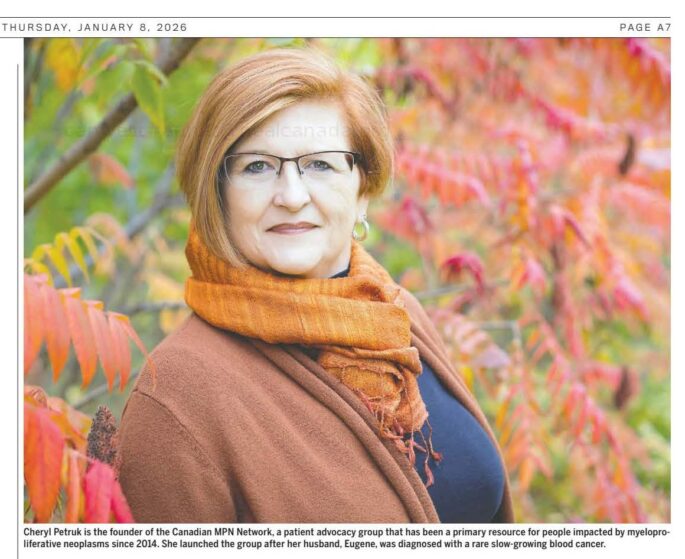


Cheryl Petruk, founder of Heal Canada, joined The Andrew Carter Morning Show to discuss Rare Disease Day, a global awareness initiative held annually at the end of February. The day aims to highlight more than 7,000 rare diseases that collectively affect millions of people worldwide.
Andrew Carter
Rare Disease Day is coming up at the end of the month. It’s a moment to shine a light on a part of the healthcare system that doesn’t often get the attention it deserves. Cheryl Petruk is a founder of Heal Canada, a leading voice in patient advocacy, is on the line. Good morning!
Cheryl Petruk
Good morning. How are you today?
Andrew Carter
I’m fine. So is this a day that we talk about what I call orphan diseases, people that, that, you know, diseases that people don’t really know that much about but need some attention?
Cheryl Petruk
Absolutely. So, you know, it’s a global awareness day that every year, at the end of February, you know, especially in leap years, um, tries to shine the light on more than seven thousand rare diseases. Um, you know, and these diseases will affect millions of people worldwide. It’s not just, you know, if there’s only one or two people in the world, it’s millions of people that have these rare diseases. And here in Canada, one in twelve people lives with a rare disease.
Andrew Carter
When you’re talking about, you know, thousands of rare diseases, how do you tackle a problem that big?
Cheryl Petruk
Well, gosh, you know, while each rare disease is, you know, individually uncommon, together they can, you know, affect a significant portion of a population. You know, so in Canada, while our population isn’t, you know, the same numbers as the USA or other countries, you know, really it’s, it’s a diagnostic odyssey that patients will be traversing on because they experience the same issues and symptoms as people that have, you know, a generic garden variety type of disease, you know, stress and difficulty accessing appropriate care. And, but, you know, really the burden of these rare diseases is really quite heavy financially, emotionally, you know, and even socially.
Andrew Carter
And probably not a lot of support, not a lot of information about what you have. I mean, I’m just thinking a friend of mine who has transverse myelitis, and when she, you know, she started the Transverse Myelitis Association because there was just no information on it. There was no, there was no support. There was, it, uh… People, you know, just don’t know these diseases.
Cheryl Petruk
Absolutely. You know, and one of the biggest gaps in our healthcare system with folks that have a rare disease is typically a delayed diagnosis. So, you know, folks will see whether it’s children or adults, they’ll see multiple physicians, you know, over several years before getting that answer. And so establishing an advocacy group or establishing that community, um, can help people living with that rare disease because, you know, specialized treatments, coordination of support services, you know, people want to not be alone. They want to know that there’s someone else there experiencing the same issues that they’re experiencing. So it’s really important for folks to come together and have that connectivity.
Andrew Carter
When someone comes down with a rare disease, I mean, do they, uh, is your organization a place where they can, they can start?
Cheryl Petruk
Absolutely.
Andrew Carter
Maybe you point them in the right direction. How would they get in touch with you?
Cheryl Petruk
Our website is www.healcanada.org. We like to amplify the voice of the patient organization. So absolutely. If someone comes to our organization and looks for information, we’re gonna steer them to that community-based organization where they can be amongst, um, other folks that have that same disease, where they can get that specialized information. Um, you know, it’s really important to, I don’t want to say to funnel those patients, but that’s where the grassroots is, and that’s where they need to connect, you know, with their community. So it’s really about awareness, about learning about rare diseases and sharing that information so that people who are diagnosed with these rare diseases can get the information that they need, and help them live a better quality of life with better healthcare outcomes.
Andrew Carter
Cheryl, thanks very much for your time. Good luck with this.
Cheryl Petruk
Thanks so much. Have a great day.
Andrew Carter
That is Cheryl Petruk, founder of Heal Canada.
This interview was published by The Andrew Carter Morning Show. Listen to the original podcast by clicking here.