You and the team have done such an incredible job with a diverse set of topics and providing so much helpful and practical information.
Dr. Danielle Rice is a Clinical and Health Psychologist and Clinical Lead at the Mood Disorders Treatment and Research Clinic at St. Joseph’s Healthcare Hamilton, and an Assistant Professor at McMaster University in the Department of Psychiatry and Behavioural Neurosciences.
You and the team have done such an incredible job with a diverse set of topics and providing so much helpful and practical information.
Dr. Danielle Rice is a Clinical and Health Psychologist and Clinical Lead at the Mood Disorders Treatment and Research Clinic at St. Joseph’s Healthcare Hamilton, and an Assistant Professor at McMaster University in the Department of Psychiatry and Behavioural Neurosciences.
Our podcast platform, Empowering Voice: Advocacy in Action, continues to grow. Here’s a preview of upcoming episodes you won’t want to miss:
Stay tuned in the weeks ahead—we’ll announce release dates across Apple Podcasts, Spotify, YouTube and more.
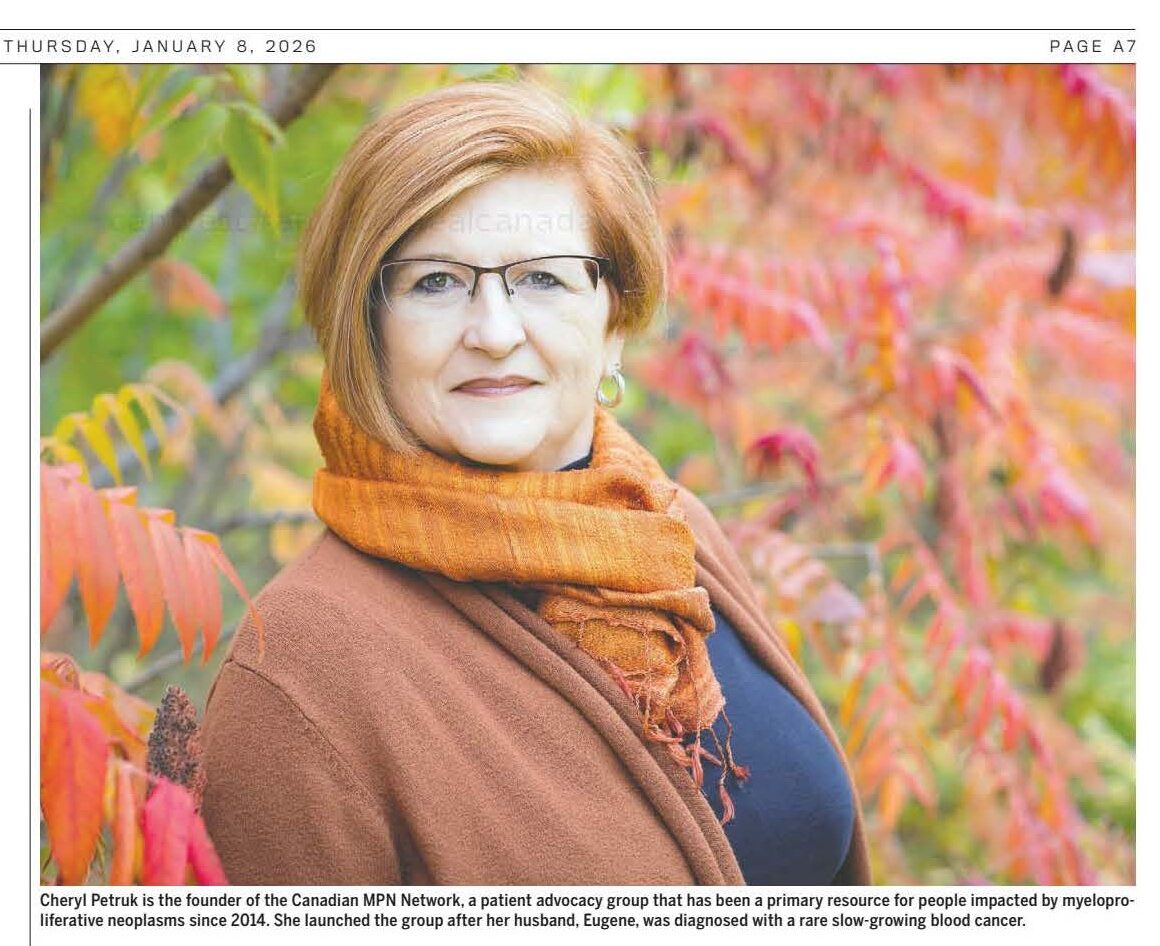
A partner ‘s cancer diagnosis led this woman to discover her passion for patient advocacy
Cheryl Petruk never planned to become a magazine publisher or the founder of a not-for-profit organization. She was working as a HR professional in 1991 when her husband, Eugene Petruk, was diagnosed with a rare slow-growing blood cancer that is in a group of blood cancers known as myeloproliferative neoplasms (MPNs).
To support her husband and be the best possible caregiver, Cheryl learned everything she could about the disease, but it wasn’t easy.
Cheryl and Eugene talked to doctors, reached out to other patients and scoured the internet to find answers to their questions about this rare disease.
“Patient advocacy is so important when you’re facing a serious health care concern and you can’t be an effective advocate if you don’t have good informationt Cheryl explains. “I figured that if I had questions, there were undoubtedly others who
had the same questions.”
In 20l4, Cheryl and a group of others founded the Canadian MPN Network, a patient advocacy group that has become a primary resource for people impacted by MPNs. The organization provides information and helps connect patients and their caregivers with support groups. Cheryl served as the chair of the volunteer board for more than five years.

James, 73, is a partner in a chartered professional accounting firm. In December 2024, James endured a mini-stroke that started this all. “They took my blood and found out my blood platelets were really high,”…

Episode 1 features Cheryl Petruk, the Founder of the Canadian MPN Research Foundation and also the Executive Director of the Canadian MPN Network…

Anemia is one of the most common and serious complications of myelofibrosis, a rare blood cancer where too many blood cells are produced in the bone marrow…
A partner ‘s cancer diagnosis led this woman to discover her passion for patient advocacy
Cheryl Petruk never planned to become a magazine publisher or the founder of a not-for-profit organization. She was working as a HR professional in 1991 when her husband, Eugene Petruk, was diagnosed with a rare slow-growing blood cancer that is in a group of blood cancers known as myeloproliferative neoplasms (MPNs).
To support her husband and be the best possible caregiver, Cheryl learned everything she could about the disease, but it wasn’t easy.
Cheryl and Eugene talked to doctors, reached out to other patients and scoured the internet to find answers to their questions about this rare disease.
“Patient advocacy is so important when you’re facing a serious health care concern and you can’t be an effective advocate if you don’t have good informationt Cheryl explains. “I figured that if I had questions, there were undoubtedly others who
had the same questions.”
In 20l4, Cheryl and a group of others founded the Canadian MPN Network, a patient advocacy group that has become a primary resource for people impacted by MPNs. The organization provides information and helps connect patients and their caregivers with support groups. Cheryl served as the chair of the volunteer board for more than five years.
James, 73, is a partner in a chartered professional accounting firm. In December 2024, James endured a mini-stroke that started this all. “They took my blood and found out my blood platelets were really high,” says James. “The doctor explained that this likely meant I had a form of blood cancer.”
“Next thing I know, I’m at the stroke clinic one week and the cancer clinic the next week, juggling all these doctors’ appointments,” says James.
The diagnosis came as a shock, but James’ reaction to his diagnosis was pragmatic. “Everybody’s got something,” he says. “I’m not going to go home and start crying. You just get at it and deal with it.”
Separated from his wife and without a caregiver, James turned elsewhere for support. He contacted Heal Canada, an organization focused on patient advocacy through empowerment, engagement and education. “My friend started the non-profit after her husband died from MF,” says James. “She helped me ask the right questions and navigate this journey. She was a big help.”
Patient organizations play a vital role in empowering Canadians as they navigate the challenges of a blood cancer diagnosis. Alongside Heal Canada, the Canadian MPN Network stands out as a key resource, offering invaluable education, fostering connections to essential support services and acting as a bridge to the medical community for Canadians living with MF.
Episode 1 features Cheryl Petruk, the Founder of the Canadian MPN Research Foundation and also the Executive Director of the Canadian MPN Network. Watch as Cheryl shares her husband’s journey with myelofibrosis as well as her own perspective as a caregiver with Jasmine Sahni, Scientific Director, Global Medical Affairs at GSK.
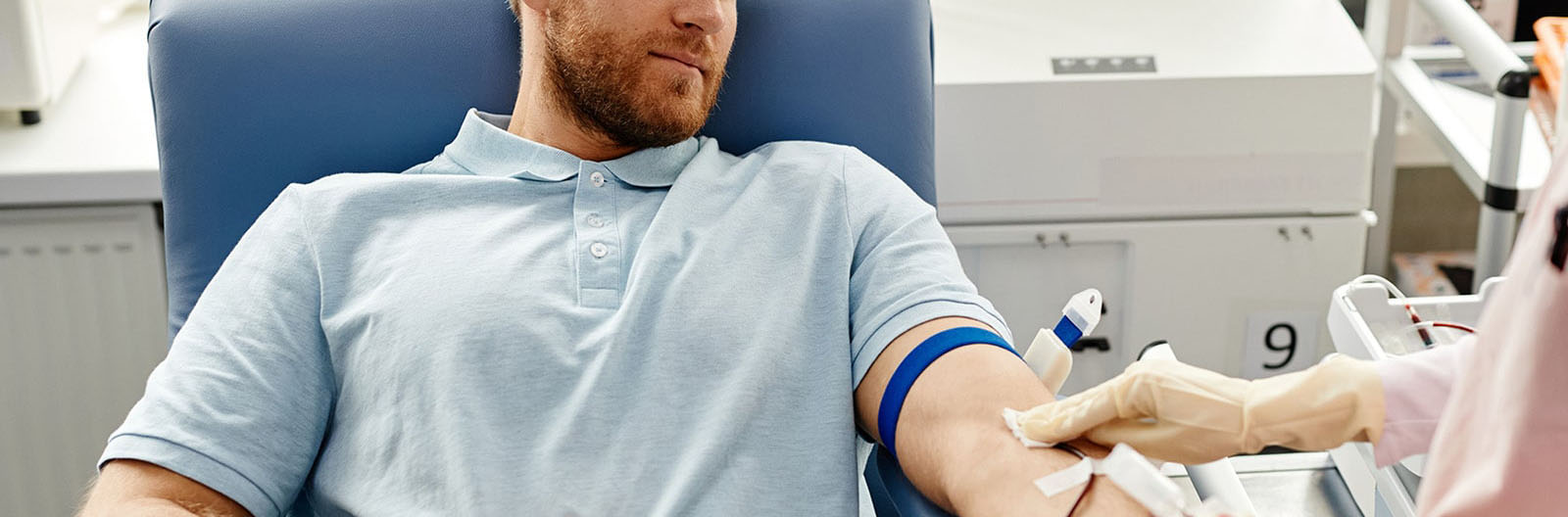
Anemia is one of the most common and serious complications of myelofibrosis, a rare blood cancer where too many blood cells are produced in the bone marrow.
Iron deficiency symptoms can be severe or persistent fatigue, cold hands and feet, weakness, shortness of breath, a tingling or crawling feeling in the legs, or even tongue swelling or soreness. It’s a health concern that can be an emotional and physical drain on well-being.
But many don’t realize that there’s a connection between iron deficiency, formally known as anemia, and blood cancer.
This is especially concerning when anemia is prevalent among women of reproduction age at 21.3 per cent in Canada, according to the 2019 Canadian Health Measures Survey, the latest research available.
Cheryl Petruk, CEO of HEAL Canada patient advocacy non-profit, lost her husband Eugene to myelofibrosis in 2018 when he was 60 years old. He had lived for 19 years with essential thrombocythemia, a rare blood disorder where there are too many platelets in the blood, but it had progressed and developed into myelofibrosis. “It is exactly the opposite of being too many platelets in your blood. Now your bone marrow has become fibrotic. It is not producing the right blood cells and your spleen enlarges because it’s trying to do a job that your bone marrow is not able to do.”